The recent transformation of the Candy plant at Brugherio into a service hub, with the announced shutdown of the washing machine production at the Lombardy site, gives rise to reflections. Numerous Italian white goods brands have now been acquired by foreign groups. These are brands that have contributed to the history of the household appliance sector in Italy and Europe, often becoming the heart of industrial districts characterized by extremely high levels of technological and design expertise. It is the “beautiful and well-made” that has made Italian products known and appreciated all over the world.
Over time, however, the situation has changed and it has become increasingly difficult for white goods companies to remain “Italian”. We only need to look at the history of some of the best-known brands to realize this. A history often written by families of Italian entrepreneurs, but also a path determined by the evolution of markets, transformed by significant and continuous changes.
Changes in the white goods industry
Globalization, delocalization, economic crises, and competitiveness (increasingly strong on prices) have profoundly changed the white goods industry in Italy, leading to the formation of large international groups. To get a “hands-on” feel for the extent of the transformation, a quick overview of the history of the sector over the last 40 years is enough.
In 1984, the Electrolux Group became the majority shareholder of Zanussi in Pordenone. Ten years later, the Italian company, which had also acquired Zoppas in 1970, was 100% controlled by the Swedish multinational.
Ignis, which has its origins in the company “Officine Elettrodomestiche Ignis Guido Borghi e Figli” (founded in the 1940s in the province of Varese), also passed into foreign hands in 1991: in this case, the American Whirlpool.
Next came Faber (at Fabriano), founded by Abramo Galassi, who was later joined by his son Alvaro: in 2005, it was acquired by the Swiss multinational Franke.
Also in the Marche region, about a decade later, in 2014, the Merloni family sold control of Indesit Company (the evolution of Merloni Elettrodomestici located at Fabriano) to Whirlpool Corporation. The Italian company was integrated with Whirlpool Europe (creating Whirlpool EMEA) and then, in 2024, Beko Europe was created from an agreement between Whirlpool and the Turkish company Arçelik.
The latest major sale, in chronological order, is the Candy Group, sold by the Fumagalli family to the Chinese company Haier. In 2019, the acquisition was completed and the Candy-Hoover Group became part of Haier Europe.
What future is there for the Made in Italy white goods industry?
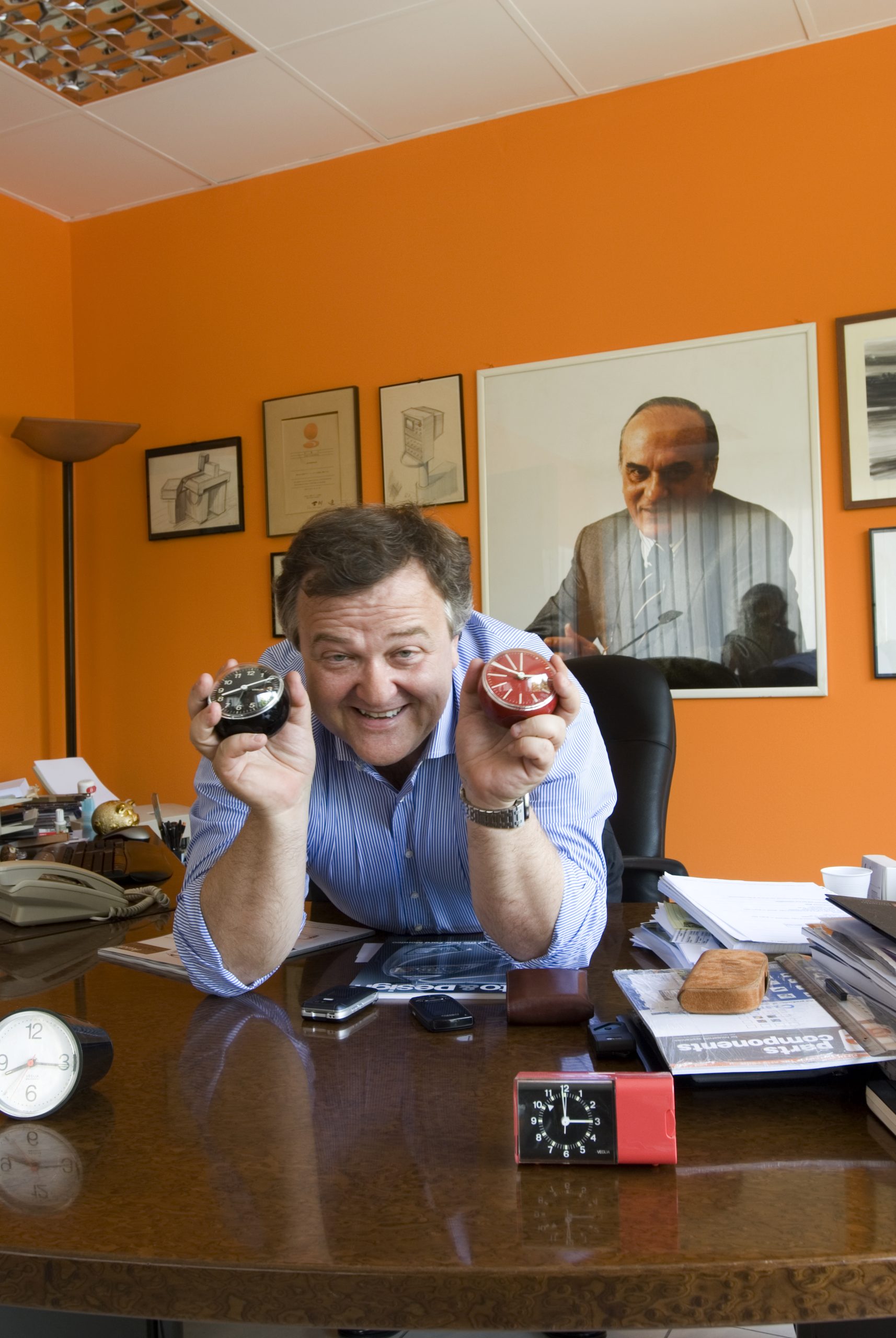
Considering what has just been said, one wonders what future there is for the Made in Italy white goods industry and what Italian companies can leverage in such a complex context. We discussed this with Marco Bonetto, a well-known designer at the helm of Bonetto Design Center. In his professional career, he boasts numerous and prestigious collaborations: to name but a few, he has taught at the Politecnico and the Accademia di Brera in Milan, was director of the Master’s in Car Design at the Domus Academy (also in Milan) and was a member of the Steering Committee of ADI (Italian Association for Industrial Design).
In the field of household appliances, in particular, he collaborated with the Candy Group, first as an external consultant and, since 2011, as external director of Candy’s Freestanding Style Center. We take stock of the situation with the designer, reflecting on the past, present, and possible future prospects for the sector.
In your opinion, can we say that the Made in Italy white goods industry is in crisis?
I would say so, because it is clear that many historic Italian white goods companies have now been sold to foreign groups. It is increasingly difficult to compete on the market while manufacturing in Italy. What happened in Brugherio last June did not surprise me. Even before the acquisition by Haier, a significant part of Candy’s appliance production had been relocated outside Italy. As for washing machines, let’s think about the acquisition of the Chinese company Jinling in 2006.
What could be the causes of this crisis?
Two ideas come to mind that were mentioned to me when the Candy Group was sold. These are reflections that are common not only to white goods companies but, more generally, to various Italian companies that have had a great manufacturing history. The first idea concerns the critical issues associated with generational change, i.e., when continuity is interrupted and subsequent generations do not carry on the family business.
Another aspect concerns the formation of international groups that are becoming increasingly large and very difficult to compete with. Several Italian brands have chosen to join these groups in order to remain competitive on the market. Let me give you a concrete example: think of the investments needed to develop a new product. If you are part of a large group that owns various brands of household appliances, you can benefit from the so-called cross-utilisation of components. This means that the (normally significant) costs for the development of a certain component, electronics, etc. are spread across several products within the group, thus creating an advantage in terms of productive investment. The same situation also occurs in the automotive sector.
Does this “impoverishment” of the Made in Italy white goods industry also have consequences for the component manufacturers?
Undoubtedly yes, there is a cascade effect. For molds or components with low added value, Asian competition is very strong, and has been for some time. However, for those technologies and solutions where there is a greater innovation gap, the situation is different. If there is added value, then the supplier can work in co-design with the customer. In this area, Italian companies stand out for their creativity (both in terms of design and technical development) and speed.
What should Made in Italy brands focus on today to face the competition?
Surely on creativity, and therefore on design. And also on the typical quality of Made in Italy. Another very important aspect is brand recognition, i.e., the set of characteristic elements that remain recognizable in products, even while innovating forms and technologies. Italy (and Europe in general) has a strong visual culture to draw on: I am talking about products with their own identity because they are the expression of a formal narrative, not just technologies that meet functional needs.
What has favored the flourishing of the white goods industry in Italy in the past?
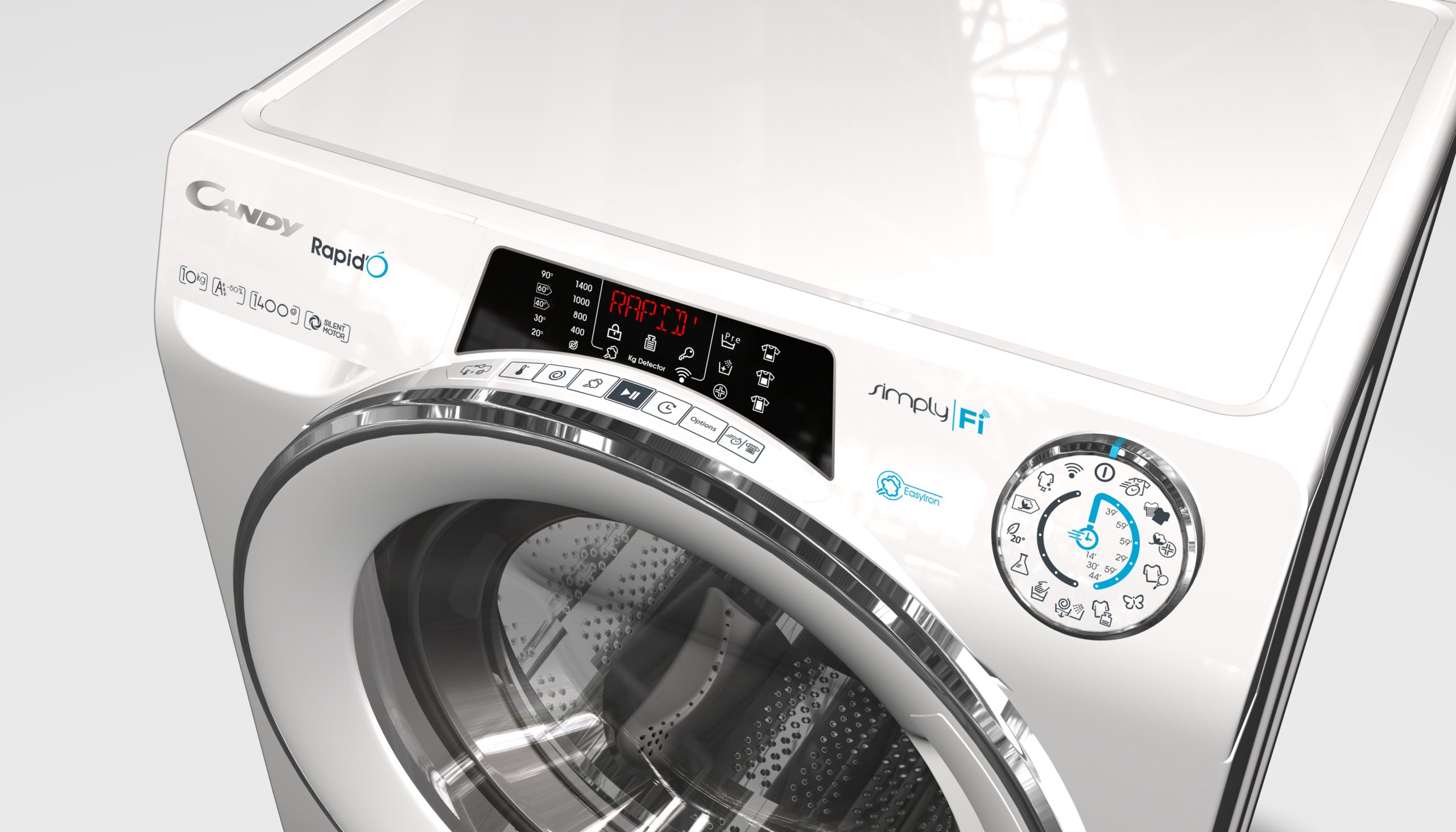
I would say technology, design, and price competitiveness in relation to product content: all this has created fertile ground for the development of the white goods industry on the Italian and European markets. It is an industry that has often generated remarkable innovations. For example, if we think of the Candy RapidÓ washing machine, the product was designed with two innovative solutions that were greatly appreciated by consumers: the door positioned higher (so the user does not have to bend down too much to load the laundry) and wider (for easier access).
Another aspect that has greatly characterized the Made in Italy white goods industry is the presence of entrepreneurial families, who not only managed the economic aspects of the company but were also heavily involved in product development. They were personally involved, working closely with designers, technicians responsible for the engineering and marketing team. They were the holders of their products’ history, thus preserving an important cultural background.
In addition, another distinctive feature was the desire to conduct research and experimentation. Let me tell you an anecdote about this: when Candy reached its 70th anniversary, engineer Aldo Fumagalli asked me to create a concept for a “futuristic” washing machine, which would be presented during an event at the Villa Reale in Monza. This led to the creation of the White Cube prototype, so named because of the lack of visible knobs and buttons. The idea was that the controls would remain hidden behind the front panel. It was a great success and, a few days later, Aldo Fumagalli expressed his intention to work on the project to bring the product into production. We worked on it and the evolution of that concept became Candy Bianca, a smart washing machine equipped with a touch control knob.
I recounted this episode, which I experienced firsthand, because it clearly expresses the desire to explore new territories. Perhaps we went too “far forward”, but it wasn’t difficult to then take a step “back” to reconcile cutting-edge ideas and production reality: the end result was still an innovative product. This is an example of Italian and European manufacturing culture.
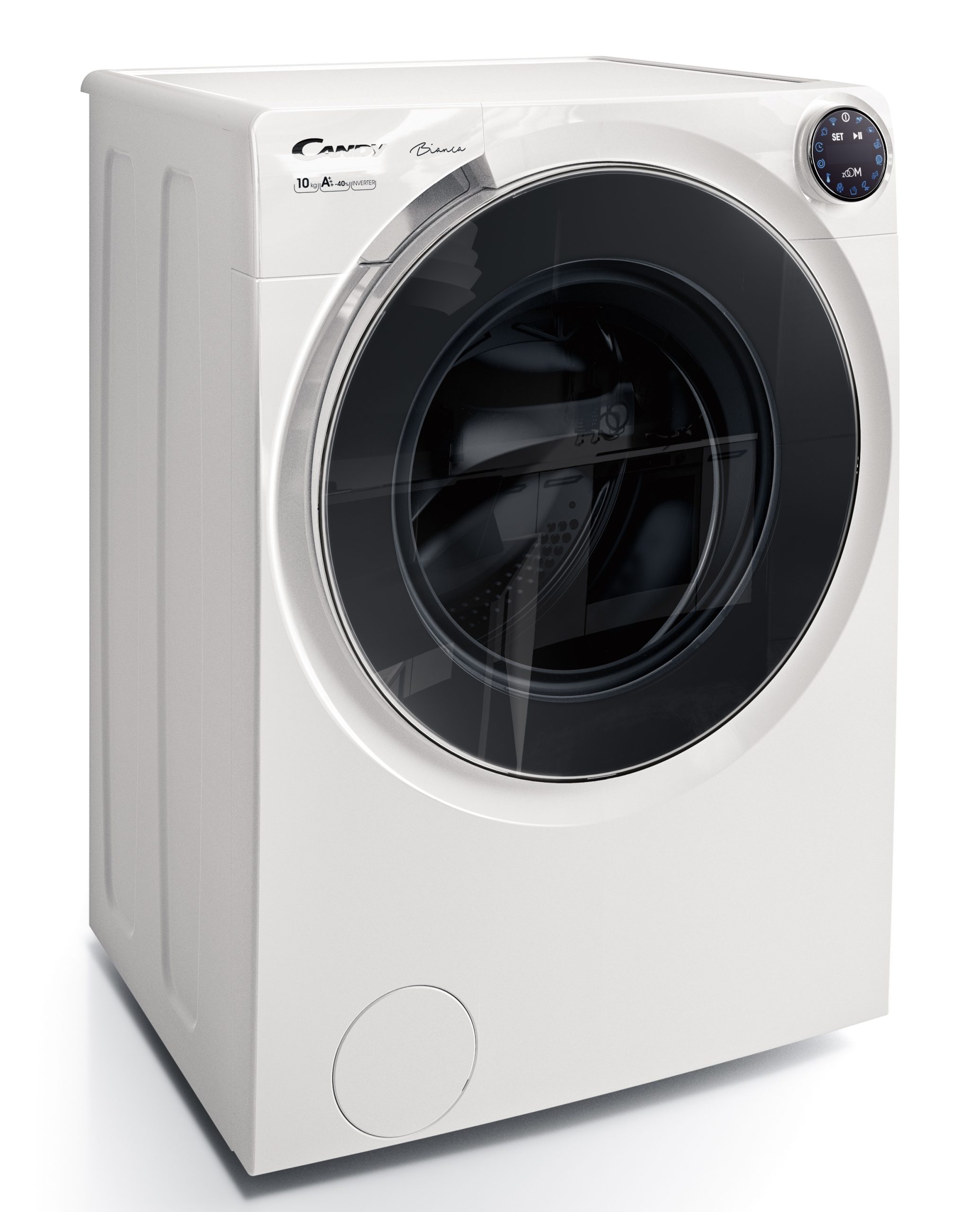
During the years you worked with Candy, what did Made in Italy mean for the company?
Vision, creativity, Italianness.
Are “visionary” entrepreneurs still needed?
In my opinion, yes. If we consider the history of the great families of white goods industry, their companies were often founded by visionary entrepreneurs: they created a project that then grew and was carried on by subsequent generations. A visionary is someone who has intuition and also the courage to take risks (because the “vision” does not always translate into success). It is someone who is like that because of the individual characteristics and who is often motivated by practical needs: in fact, great visionaries often do not initially have the financial means to realize their dreams. They are driven by tenacity and belief in their own ideas. Think of Steve Jobs, who started out in his garage. And in some cases, this has also been the history of Italian entrepreneurs who have made the Made in Italy white goods industry great.