Article by Dario Gozzi
Artificial intelligence is rapidly transforming the entire appliance industry. The path is now traced and contemplates a close symbiosis between IoT and AI.
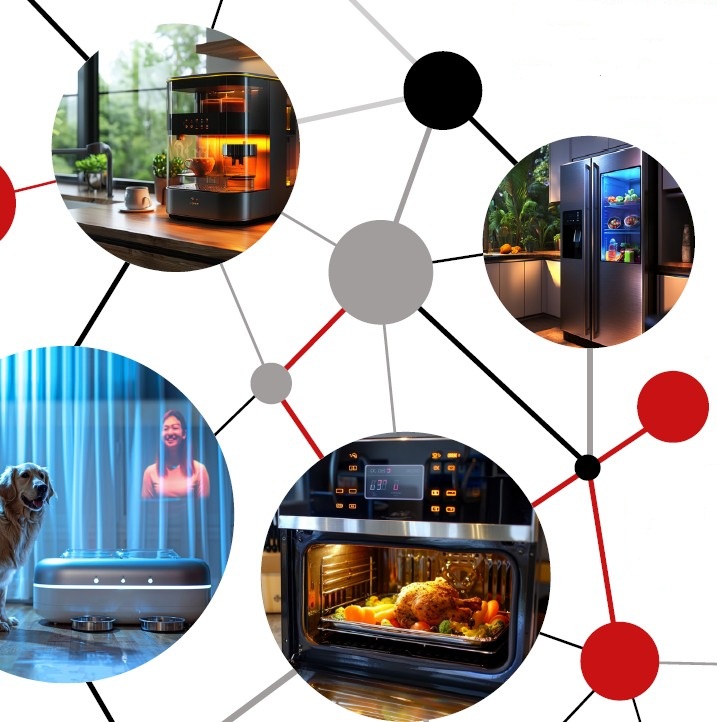
Artificial intelligence improves the functionality of smart homes, characterized by various interconnected devices, normally controlled by a central hub which helps integrate and automate multiple appliances, allowing homeowners to give commands from a single interface or via voice commands.
The fundamental characteristic of AI algorithms applied to appliances is to learn their usage preferences, analyze data from connected devices and make intelligent decisions. Other ways AI is improving the functionality of smart appliances include energy efficiency, adaptive food cooking, personalized duty cycles, and remote monitoring and control.
Voice management
A specific subset of AI, ML (machine learning) and NLP (natural language processing), is already widely used in many applications today. NLP is a form of artificial intelligence that allows software to understand words and sentences (spoken or written) in much the same way as humans. It is how voice assistants, such as Siri and Alexa, can understand and respond to human speech and perform tasks based on voice commands.
Depending on interoperability, these assistants can control different aspects of the home (lights, blinds, different types of appliances, security systems and medical aids), all through simple voice commands.
Predictive maintenance
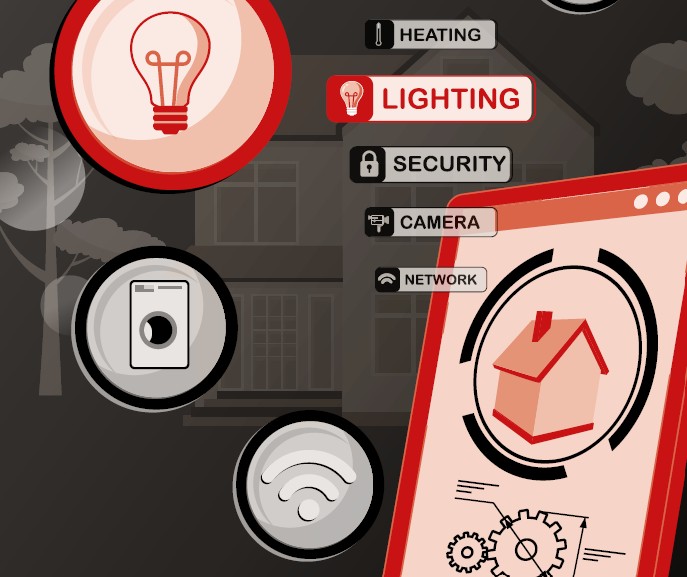
Predictive maintenance allows you to predict machine downtime due to failures, errors and component defects. Analytical models, together with monitoring of operating conditions, use data from various sensors to identify behavioral patterns of appliances that can lead to malfunctions or failures, all before risking user safety.
The use of historical data analysis also falls within the broad scope of predictive maintenance. With specific algorithms, it is possible to determine the correlation between events and machine failures. Among the various analyses, it is possible to determine how many machines of a given family will be used (and for how long) before particular assets show signs of wear.
This ability is very useful for both users and manufacturers, because it can improve the efficiency of large appliances while reducing their costs.
All of this shows how with the widespread adoption of technologies such as the IoT, cloud computing and artificial intelligence, appliance maintenance has moved from a reactive to a proactive position, further simplifying and streamlining processes.
Of course, predictive maintenance also allows for the precise identification of faulty components, meaning that only the individual part implicated in the failure needs to be replaced, rather than the subassembly or the entire machine.
Solutions that can help reduce digital pollution
From what has been said, it is undeniable that new technologies bring enormous benefits. However, as with all great innovations, among the advantages there are also some critical issues. One is digital pollution.
Sandro Mascetti, CEO of MAS Elettronica, underlines how all digital tools are particularly energy-intensive and the amount of energy required is directly proportional to their power and operational capacity. When we talk about digital pollution, we are therefore referring to that relating to the functioning and production of digital devices, but also to the functioning of data storage and processing complexes or devices for connecting, transmitting and streaming information.
The measures that can be adopted to mitigate digital pollution are part of a complex set of rules and best practices, which do not only aim to reduce the number of connected users or reduce the relative usage times.
«Let’s try – exemplifies Mascetti – to consider a package of themes that together can significantly influence:
• reduction of device consumption. Compared to the past, the requirements of electronic devices have undergone radical changes and require the use of components that have reached extremely low energy consumption levels.
• greater exploitation of green and harvesting energies.
• redesign of the production chain. Together with the use of green energy and energy harvesting, the production chain of devices must be rethought. This is critical but will need to be taken into consideration, also in relation to the regulations on emissions that will become increasingly stringent».