The smart home in Italy continues to grow, and with it, connected appliances. This is demonstrated by the latest data released by the Internet of Things Observatory of the Politecnico di Milano. In 2025, total turnover reached €1 billion for the first time, an increase of 11% compared to 2024. This result is in line with the main European markets, where growth is between 8% and 12%. However, Italian per capita spending remains below the EU average (€16.9 per inhabitant compared to €34.2).
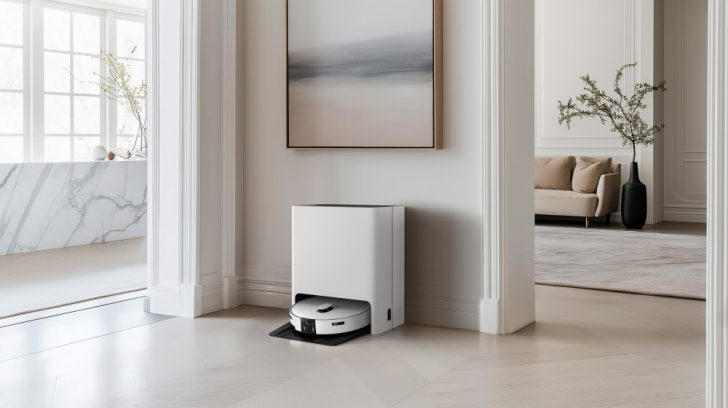
In this scenario, connected appliances occupy a prominent place in the smart home market. They are in fact the second largest category in terms of turnover. Within this, small domestic appliances (SDA) stand out, having recorded particularly positive performance.
Robot vacuum cleaners and fryers among the top products
According to the Internet of Things Observatory, connected appliances accounted for 20% of the market in 2025. This is a significant share, second only to security solutions (€305 million, or 30% of the market).
Smart small appliances recorded significant growth (+20%), thanks mainly to the consolidation of sales of robot vacuum cleaners and air fryers. Alongside these appliances, other connected products are also beginning to attract consumer interest, such as autonomous robot lawnmowers and Wi-Fi pet food dispensers.
Besides, small appliances showed a higher dynamic than large appliances. For the latter, the trend is positive but more modest (+5%). However, the Observatory reports an expansion of the connected range, growing integration into digital ecosystems (proprietary apps, voice assistants), and the introduction of features to support programming and ensure Over-The-Air software updates.
Overall, connected appliances generated a market worth €195 million in 2025, with double-digit increase compared to the previous year (+15%). Next in importance are energy-saving devices (€142 million, 14% of the market) and smart speakers (€112 million, 11%). The remaining market share consists of audio speakers (7%), connected dimmers & wiring devices (6%), light bulbs (6%), Assisted Living solutions for the health of frail users (2%), devices for remote management of curtains and roller shutters (2%), and smart plugs (2%).
A turning point in terms of offering
2025 marked a turning point in terms of offering: AI took on a leading role in smart home solutions, opening up new possibilities. “Artificial Intelligence – explains Angela Tumino, Director of the Internet of Things Observatory – has become a central element not only for home automation, predictive maintenance, and energy consumption optimization, but also as the main lever of differentiation between free basic functionality and advanced services with high added value, increasingly offered through recurring subscription models”.
Besides, the Politecnico di Milano‘s research also notes a step forward in the maturity of demand for smart home solutions. More than six out of ten Italians (63%) own at least one smart device, an increase of 4% compared to 2024. Even more significant is the evolution in usage: over half of users (51%) have actually connected the devices they have purchased. This signals an increasingly concrete perception of the value generated by smart solutions.