In the smart home, appliances and robots are getting closer and closer, taking the concept of “simplifying the consumer’s life” to a higher level. Innovations in robotics and the combination of AI and IoT have made it possible to raise the bar even higher. One example of this is CLOiD, LG’s new AI-enabled home robot.
“LG CLOiD – explains the company – is designed to perform and coordinate daily household chores through interaction with connected home appliances. This device, which leverages the ThinQ ecosystem and technology already integrated into the ‘Self-Driving AI Home Hub’ (LG Q9) unveiled last year, represents LG’s latest step in the field of AI-based home robotics and smart home platforms”.
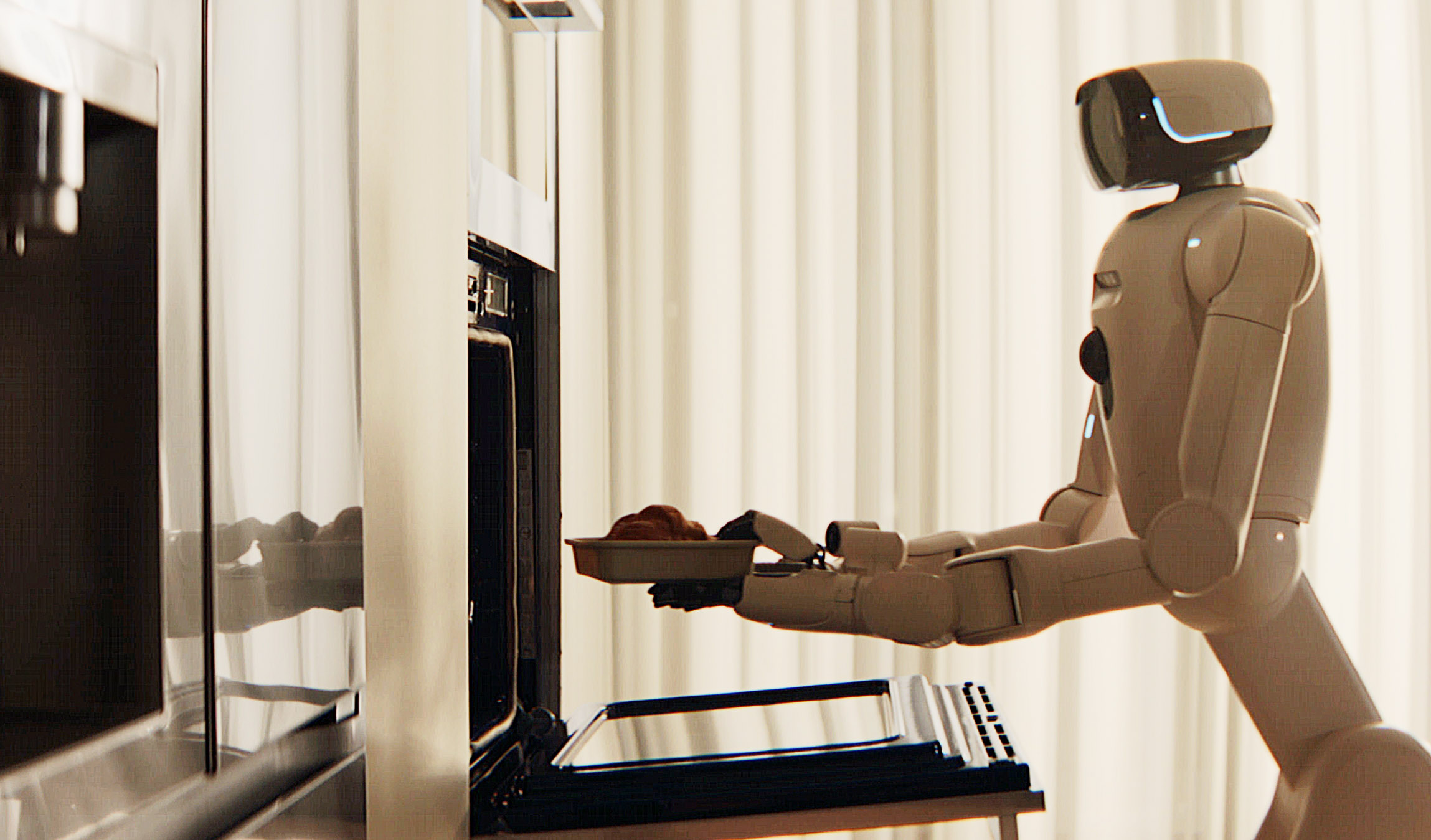
During CES 2026, LG CLOiD demonstrated its capabilities in various domestic usage scenarios. In one scenario, for example, the robot takes milk from the refrigerator and puts a croissant in the oven to prepare breakfast. When the occupants of the house leave, LG CLOiD starts the laundry cycles and folds garments after drying.
The robot’s design and technologies
LG CLOiD consists of a head, a torso with two articulated arms, and a wheeled base equipped with autonomous navigation. The torso can tilt to allow the robot to pick up objects from different height levels.
Just like human arms, LG CLOiD’s arms canperform numerous movements and are equipped with five fingers, enabling robot to handle a wide range of objects and perform various tasks in the kitchen, laundry room, and living areas.
The robot is equipped with a processor which, combined with the display, speaker, cameras, sensors, and generative AI, allows LG CLOiD to communicate with users using natural language, learn the layout of the home environment, and control household appliances.
The design and technology that allow the wheeled base to move nimbly within the living space are derived from the experience gained with robot vacuum cleaners and LG Q9. The base design was chosen for its stability and safety, reducing the risk of tipping over if the robot comes into contact with a child or pet.
In addition, LG CLOiD uses “Physical AI” technology that combines the Vision Language Model (VLM), which understands images and videos, and Vision Language Action (VLA), which translates visual and verbal inputs into actions. These models have been trained on tens of thousands of data on household chores to enable the robot to recognize appliances, interpret user intent, and perform contextual actions such as opening doors or moving objects.
A look into the future
Integration with the ThinQ ecosystem and ThinQ ON hub expands the capabilities of LG CLOiD. Besides, with a view to future development, LG has introduced a new brand of robot components: LG Actuator AXIUM. “We aim to continue developing domestic robots – explains the company – with the goal of laying the foundations for a home where household chores are entrusted to robots and smart devices, allowing people to rest and enjoy their free time”.