Article by Maria Eva Virga
A decline in consumption and competitive pressure are driving Italian manufacturers of the vending sector to innovate their machines and systems: connectivity, energy efficiency, customisation and automation are becoming key drivers. But what are the main Italian innovations in vending machines today?
Innovations span various areas
“The vending sector has historically been very dynamic – says Massimo Trapletti, president of Bianchi Industry and Confida – and in recent years, technological innovation has played a central role in the evolution of the machines. Today, the main ‘Made in Italy’ innovations span various areas. Primarily is the user experience, which is increasingly similar to that of digital retail, thanks to the integration of touchscreens and intuitive interfaces that make interaction with the machine simpler and immediate. This is accompanied by the spread of cashless and mobile payments, such as contactless payments, dedicated apps and QR codes.
Another key element is the advanced telemetry, which allows operators to monitor dispensing, stock levels and any faults in real time, improving management efficiency. At the same time, energy-efficiency solutions are becoming widespread, such as inverter motors and smart standby systems, which enable a significant reduction in energy consumption. The sector also pays great attention to the safety and reliability of the machines, with increasingly advanced anti-vandalism systems and 3D product recognition technologies, as well as to the growing use of sustainable materials and recycled plastics in the construction of vending machines.
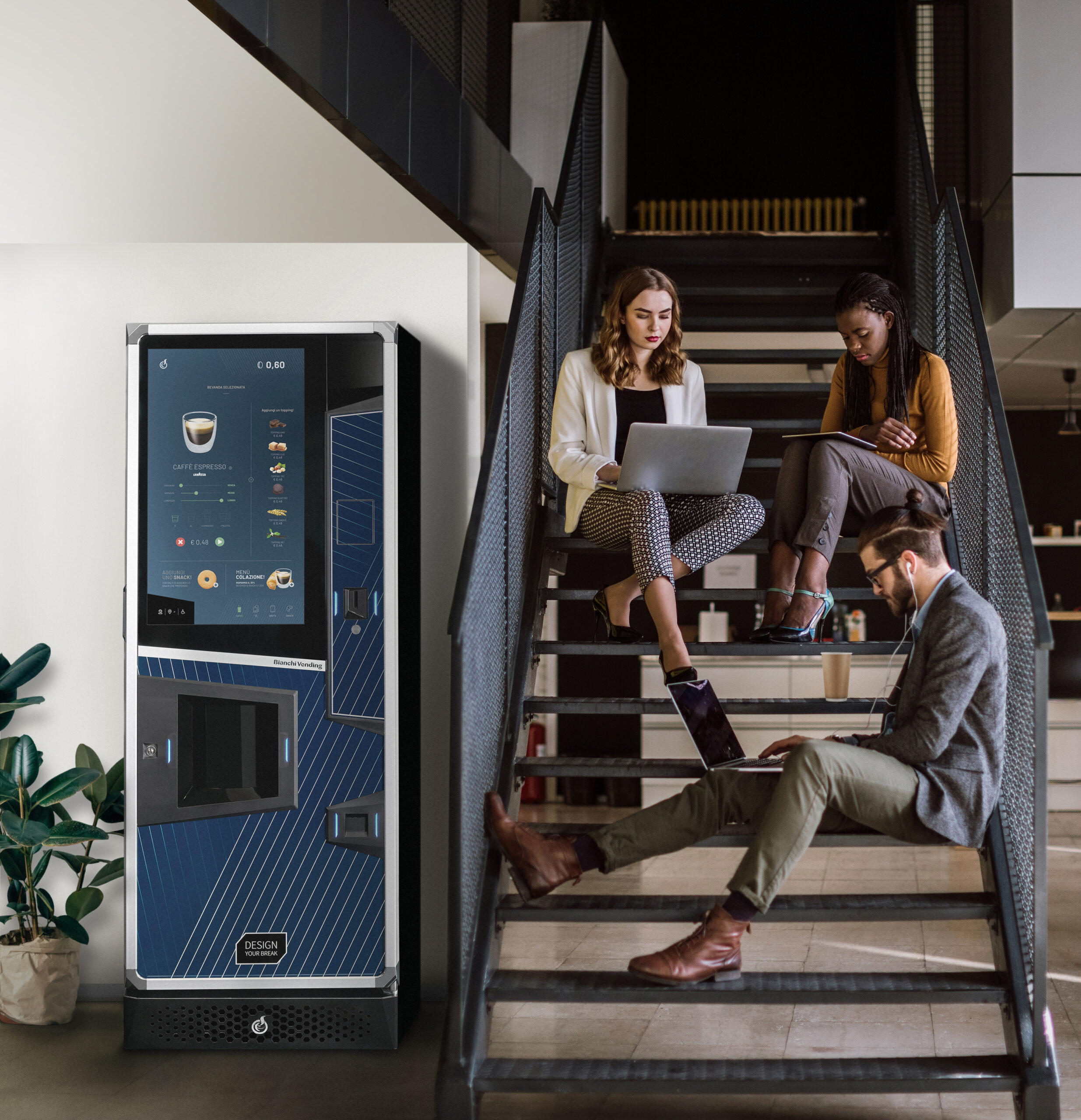
As for our company, we have several very recent concrete examples: from models such as Intuity, equipped with attractive 32-inch touchscreen, easy to use not only for the end user but also for the operator, to the online touch interfaces of Everly and Desia, which allow operators to monitor and manage the machine remotely. Another example is Flessy Antivandalica, a snack machine that combines greater capacity with a particularly effective anti-vandalism protection system. We make our expertise available to develop bespoke projects for clients wishing to create highly customised special machines”.
Energy, digitalisation, user experience and integration
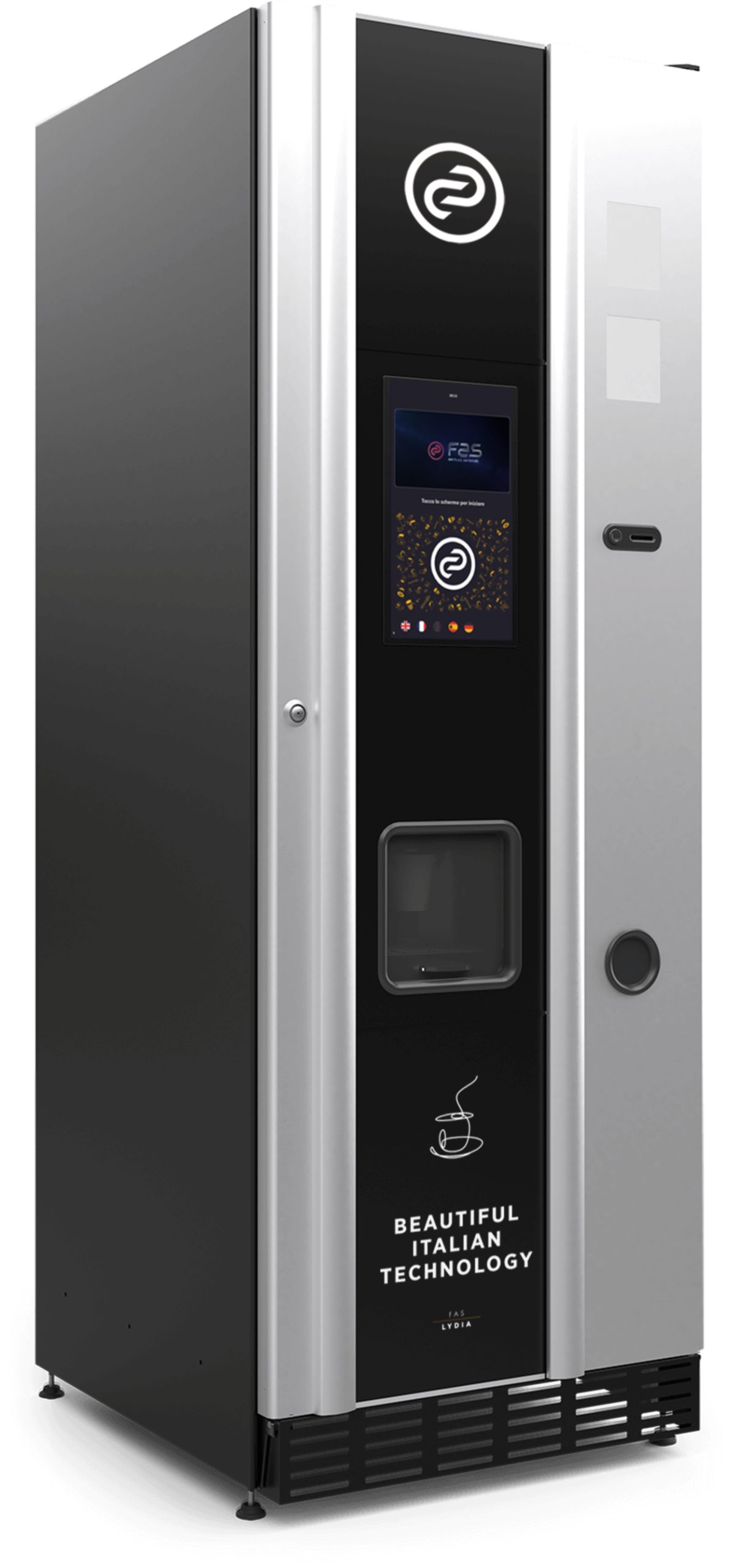
According to Francesco Cantini, CEO of Fas International, Italian innovation in the vending sector is currently developing along four main lines: “reducing energy consumption, digitalisation and remote fleet management, improving the user experience, and full integration with cashless and IoT ecosystems.
A concrete example is the development of connected vending machines capable of automatically optimising energy consumption, maintenance and stock management, thereby increasing operational efficiency and sustainability for operators”.
Quality in the cup
“Our patented technology is called Variplus – explains Andrea Pozzolini, CEO of Rhea Vendors Group –. It is a system comprising three components – Variflex, Varigrind and Varitherm – which work together to coordinate the ideal brewing pressure, grind, water quantity and temperature, ensuring the machine is capable of producing coffee and other beverages with a high level of quality in the cup. We developed this system because we are almost ‘obsessed’ with the quality the consumer perceives in the cup.
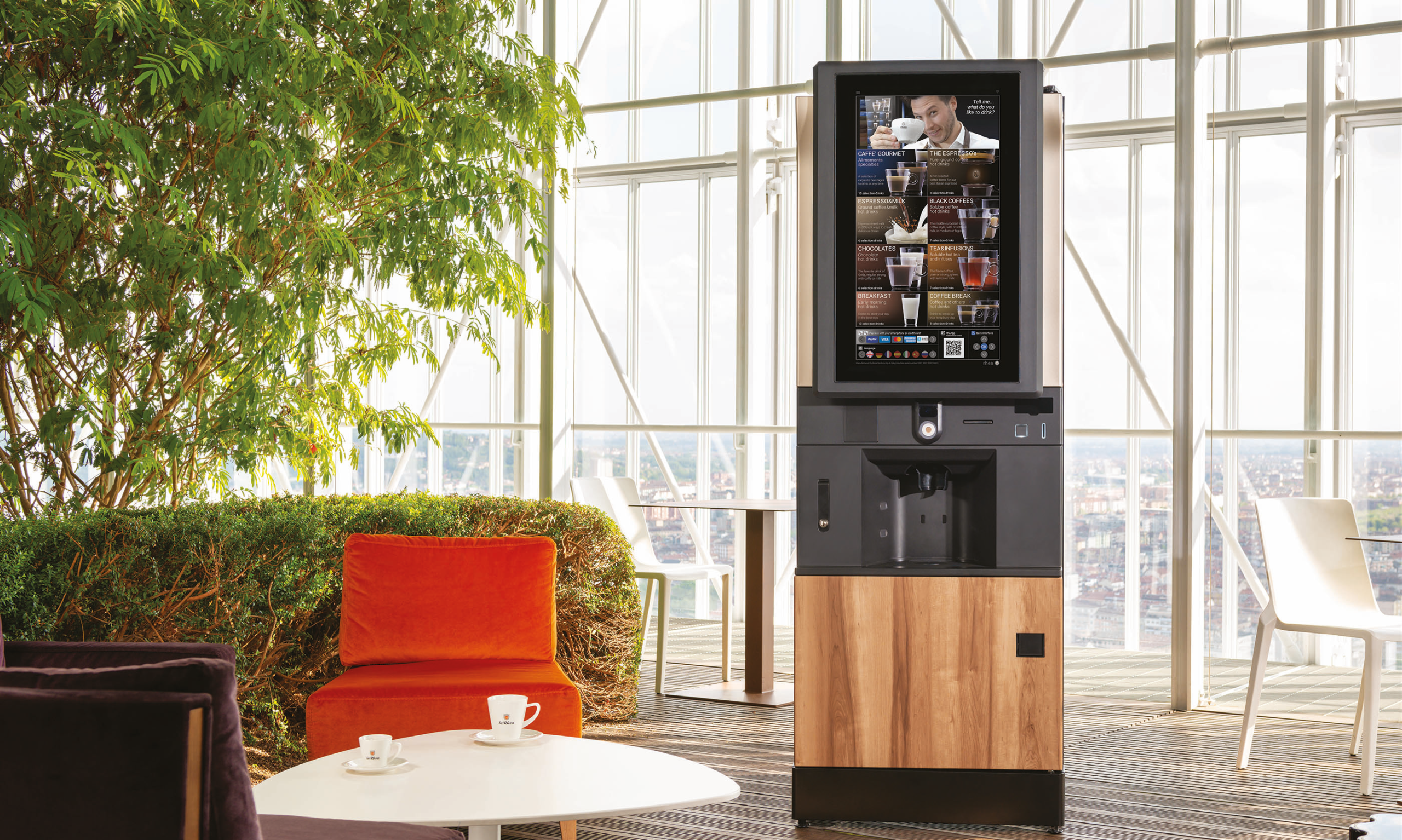
Today, the development of this technology no longer concerns just the traditional aspects of coffee, but also concerns a broader evolution of tastes and consumption habits, particularly among younger people. Our machines and technology enable the creation of gourmet recipes, where the quality of the coffee combines with the barista’s creativity, such as the Cappuccino Panettone, Biscocco or Matcha Latte. For this reason, we constantly invest in our ability to develop and adapt new offerings capable of responding to a constantly evolving market.
Furthermore, as we sell a great deal abroad, we have developed a passion for cultures different from our own: the espresso requested in Peru, for instance, is different from the Italian version. We study and adapt recipes whilst retaining traditional elements. We also develop concepts, such as Barista on Demand, the innovative prototype of a self-driving mobile coffee shop, to explore the future, collaborating with universities as well”.