Article by Christian Reinwald, Head of Product Management & Marketing, reichelt elektronik
The digital and energy “double transition” is reshaping the priorities of businesses, public administrations, and industrial supply chains. In this scenario, an element often perceived as a simple “commodity” is once again taking on a decisive role: electronic components. Without the right components, technologies such as artificial intelligence, edge computing, industrial automation, smart-energy, and electric mobility cannot be translated into concrete solutions.
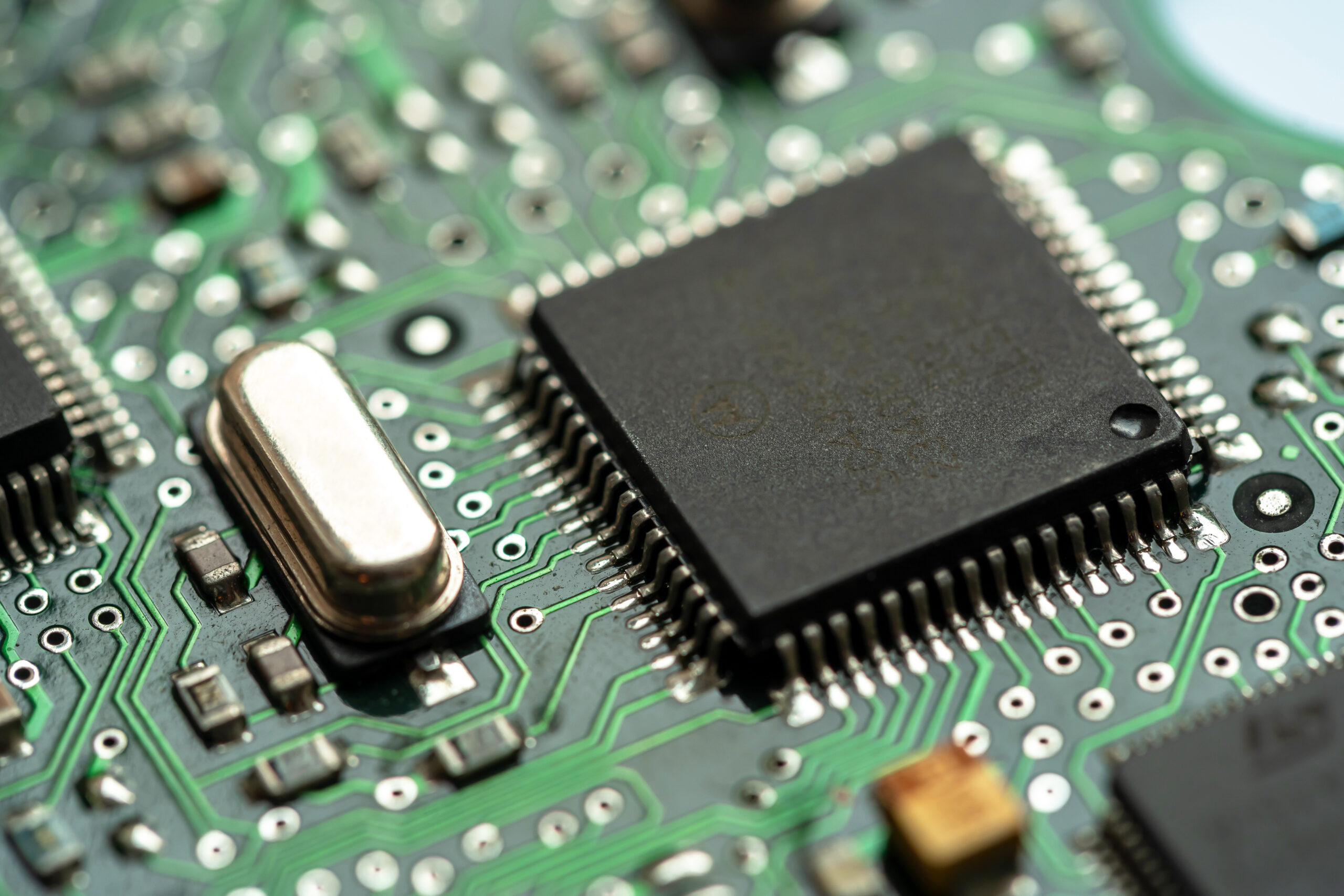
Component procurement: from technical need to competitive lever
For many years, electronic components were managed as “standard parts” purchased at the best price. Today, this is no longer the case. Demand is changing for three main reasons:
1 Greater technical specialization
Companies demand advanced components: sensors with integrated connectivity, microcontrollers optimized for AI-on-the-edge, high-efficiency power supplies, or components that comply with environmental regulations.
2 Flexible volumes and accelerated cycles
One-off orders for rapid prototyping are on the rise, while other projects generate sudden peaks in procurement when production enters the start-up phase.
3 Greater interoperability and certifications
Components must be compatible with IoT ecosystems, smart infrastructures, and consolidated industrial communication standards, reducing complexity during integration.
This heterogeneity makes procurement a strategic function. A significant fact: over 55% of electrotechnical companies associated with ANIE report difficulties in sourcing raw materials, while 58% indicate specific critical issues with electronic components1.
This demonstrates that even a delay on a single sensor or microcontroller can impact time, costs, and competitiveness.
For this reason, the role of distributors must evolve: from the “catalog + price + delivery” logic to a consulting model capable of interpreting demand, anticipating trends, and supporting companies in managing their inventories in relation to technological megatrends.
Signals from the market
Market analyses confirm that we are in the midst of a structural transformation. The European edge computing market was worth $3.42 billion (2023 data) and is estimated to grow at a CAGR of 35.4% between 2024 and 20302. In particular, edge computing allows data to be processed directly on machines, sensors, and IoT devices, enabling real-time industrial applications.
The European industrial automation market, on the other hand, will grow from $53.7 billion (in 2022) to $94.6 billion in 20303.
In Italy, the technology sector represented by ANIE recorded a +2.2% growth in production in 2024, while overall manufacturing recorded a -3.7% decline4.
These indicators confirm that companies and integrators are adopting increasingly complex systems that require advanced components: microcontrollers, sensors, wireless modules, power electronics, and IIoT hardware.
Even from our e-commerce vendor observatory it emerges that the demand is no longer for standard parts, but for components with specific technical characteristics, certifications, and integration capabilities. The variability in demand is therefore not episodic. It is a structural trend that requires flexibility, technical expertise, and the ability to support the entire cycle, from prototyping to industrial scalability.
Energy and digital transition
The transition is not an abstract concept: it is a concrete technological change that requires specialized components. According to the ICE report, in 2024 the Italian electronics sector recorded a +2.4% increase in production volumes, driven by the most advanced technology segments5.
In this scenario, retailers must become true enablers, guaranteeing availability, variety, fast deliveries, and qualified technical support, definitively overcoming the idea that components are “banal” elements. Instead, they are invisible infrastructures of the new digital-energy ecosystem.
A new paradigm of competitiveness
The centrality of electronics is now a strategic reality. To successfully address the digital and energy transition, companies must start from the “technological bricks” that constitute devices, smart infrastructure, and integrated solutions. For vendors, this means supporting customers not only with a catalog, but also with vision, expertise, and technical support.
Electronics is no longer an accessory: it is the very architecture of innovation. It is not software that drives hardware: it is hardware that makes the new digital-energy ecosystem possible. Components are no longer an appendix of the project: they are the project.
1 ANIE Federazione, Rapporto Settore Elettrotecnico ed Elettronico 2024 (Electrotechnics and Electronics Sector Report 2024).
2 Grand View Research, Europe Edge Computing Market Report, 2023.
3 Business Market Insights, Europe Industrial Automation Market Forecast, 2023.
4 ANIE Confindustria, Rapporto Economico 2024 (Economic Report 2024).
5 ICE, Report Elettrotecnica ed Elettronica 2024 (Electrotechnics and Electronics Report 2024).