Opening the dishwasher is a decisive test: you expect sparkling glasses and spotless dishes, but sometimes the results fall short of expectations. The reason is often not the appliance itself, but rather small mistakes or common myths that need debunking in order to overcome bad habits and incorrect usage practices
To help people make the most of their dishwasher, Miele, a key player in the production of premium-quality household appliances, presents the essential guide to perfect dishwashing: five golden rules to ensure maximum appliance efficiency and dispel common misconceptions.
1. Myth No. 1: More detergent = cleaner dishes
Many people believe that when dishes are heavily soiled, using more detergent is the best solution. Miele’s golden rule: excess detergent not only fails to improve cleaning performance, but can also leave dull residues on glasses and unnecessarily increase environmental impact. The solution is intelligent dosing: Miele’s AutoDos technology automatically dispenses PowerDisk detergent according to the selected programme and the actual level of soiling.
2. Myth No. 2: Eco programmes take too long and consume more
Anyone who believes that programmes lasting more than three hours use more electricity than quick cycles is mistaken. Miele’s explanation: just as a car consumes less fuel when travelling at a constant speed, the eco programme washes more slowly, heating water to lower temperatures (typically 50°C) and making use of prolonged soaking, thereby reducing overall consumption. Miele’s Class A dishwashers, through the ECO programme, reduce water consumption to 8.9 litres, while EcoFeedback technology enables users to monitor water and energy consumption, helping them select the most environmentally friendly and suitable option.
3. Myth No. 3: The more space you fill, the better
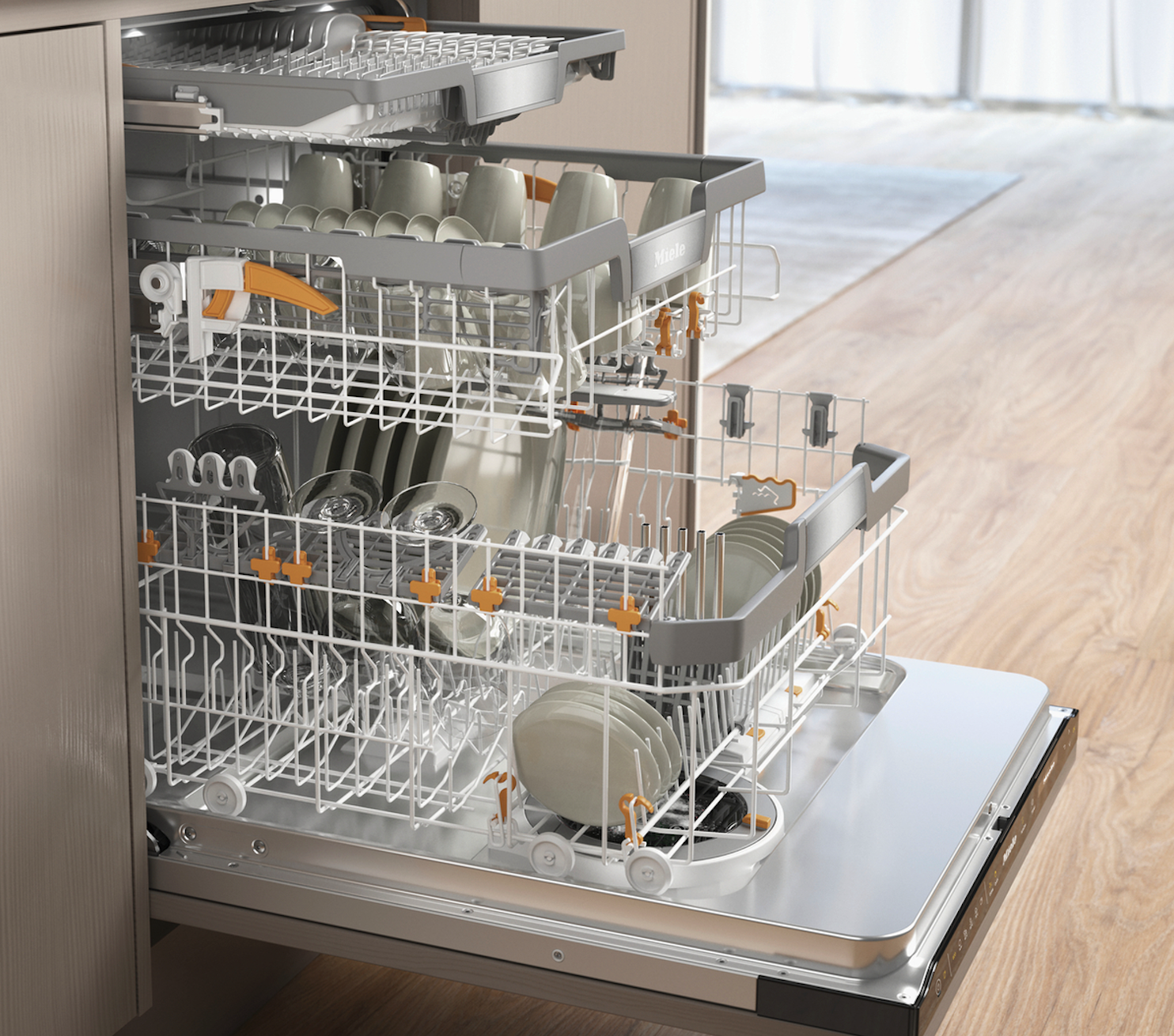
How often do people create elaborate loading arrangements just to fit all their dishes into a single cycle, convinced they are saving resources? In reality, overcrowding is the number one enemy of washing performance. Miele’s golden rule: place cups and bowls upside down and position dinner plates in the centre, angled outwards, so that the spray arms can operate effectively. A useful tip for the cutlery tray: create separate sections for knives, forks and spoons to save time when unloading the dishwasher.
4. Each rack has its own logic: for optimal cleaning, simply respect the “hierarchy” of the baskets. Miele reminds users that the upper basket is the ideal place for small, lightweight and delicate items, while long utensils such as ladles and serving spoons should be placed horizontally at the front. Special attention should be paid to tall stemware: Miele recommends never placing it in the corners, but always in the centre of the baskets, where water jets can reach it more effectively. To facilitate the washing of stemware and bulky cookware, Miele dishwashers feature height-adjustable baskets, even on a single side, ensuring greater capacity. In addition, the FlexCare shelf is useful for espresso cups and small items, while also serving as a support for glasses. Finally, dedicated programmes such as Miele’s Delicate cycle are ideal for washing fragile glassware: by adjusting water hardness, the dishwasher becomes safer than hand washing, reducing the risk of accidental breakage.
5. Is rinse aid optional? The answer is no.
Miele highlights the importance of rinse aid during the drying phase. By lowering the surface tension of water, it allows water to slide off dishes instead of evaporating and leaving limescale marks. It also accelerates the drying process itself.
Miele technology also helps users manage dishwashing remotely through connected functionality: via the Miele app, it is possible to start the dishwasher and schedule washing cycles even when away from home. In addition, the AutoOpen function automatically opens the door at the end of the programme, allowing warm, humid air to escape and promoting more effective drying.